
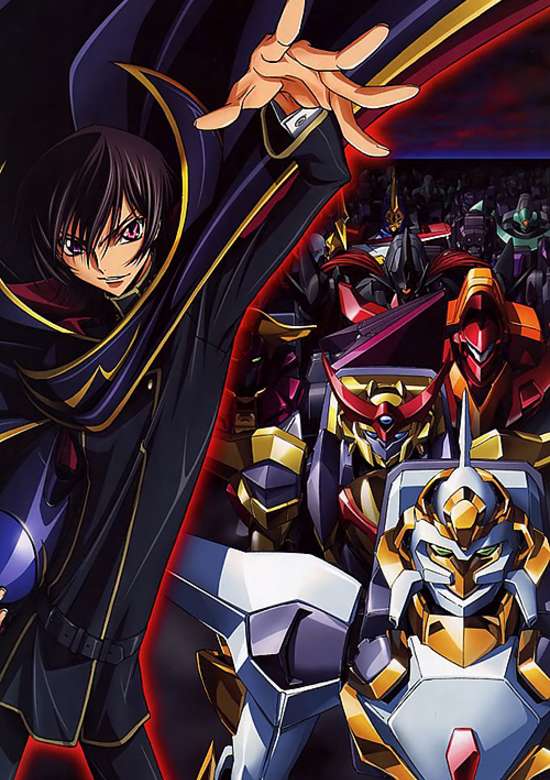
Code Geass: Lelouch of the Rebellion
In 2010, the Holy Empire of Britannia conquers Japan in a campaign completed within a month, aided by its new Knightmare Frames—mobile humanoid armor machines. Japan is reduced to Area 11, while its people are called Elevens and live under unequal conditions beside comfortable Britannian aristocratic settlements. Resistance groups seek Japan’s independence, making the occupied island the stage for a struggle over identity, freedom, and control.
Lelouch, a Britannian Imperial prince living in exile and keeping up the life of a student, is pulled into that conflict. A chance encounter with the mysterious C.C. grants him Geass, a kingly power that lets him command anyone absolutely. With this ability, he sees a path toward dismantling Britannia from inside its own order, placing his personal objective alongside the resistance’s fight.
As a sci-fi, mecha, and action series, the show combines an occupied-nation premise with armored machines and a supernatural ability. Its core tensions come from conquest versus independence, erased identity versus self-determination, and the reach of power when one person can impose his will. That blend gives the story both a broad political conflict and a sharply personal center in Lelouch’s campaign.
Released as a finished 25-episode TV series in 2006, Code Geass: Lelouch of the Rebellion is best entered from episode 1, where the occupation, Lelouch’s hidden position, and Geass are established.
- A high-stakes rebellion premise
- Knightmare Frame mecha conflict
- A striking command-based power
- Themes of identity and resistance
Fans of sci-fi mecha and rebellion-focused stories about power, identity, and resistance will find a strong fit here.